The virus relies on human social habits that can be changed.
June 4, 2020
-Princeton Alumni Weekly
The virus relies on human social habits that can be changed.
June 4, 2020
-Princeton Alumni Weekly
“The start of spring generally makes us feel more motivated – it’s a so-called ‘fresh start date,’” Katherine Milkman says. As such, it makes us feel less connected to the past. “That disconnect gives us a sense that whatever we messed up on previously, we can get right now. Maybe the old you failed to quit smoking or start a lasting exercise routine, but the new you can do it.”
March 29, 2020
-The Guardian
The coronavirus pandemic is forcing many people to rethink their monthly budget. “Some people do—but a lot of us don’t—scrutinize our purchases on a daily basis and make sure we’re sticking to budgets” in normal times, says Katherine Milkman, a professor at the University of Pennsylvania’s Wharton School. “This is going to lead people to pay more attention than they were paying before.”
March 26, 2020
-The Wall Street Journal
Katy Milkman, now a professor at the Wharton School of Business who specializes in human decision-making, says that when it comes to making a behavioral change, the trick is to pair the thing you dread with something you love.
December 31, 2019
-NPR
Katherine Milkman co-authored a major National Academy of Sciences study on diversity training published earlier this year. “Research we’ve done shows that these kinds of trainings don’t do much to change behavior.”
June 6, 2019
-HuffPost
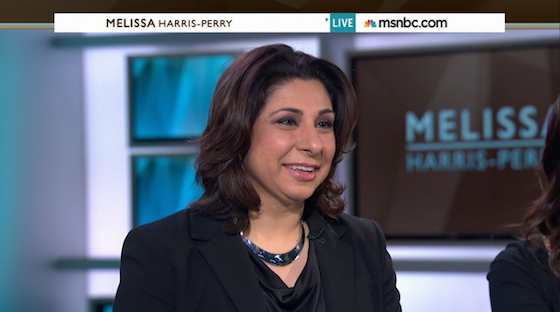
Sephora stores across the country are closing today for diversity training. Craig Melvin is joined by Katy Milkman, a professor at the Wharton School at The University of Pennsylvania, who studied whether diversity training actually works.
June 5, 2019
-MSNBC
Making people feel like insiders by sharing, using triggers to make your customer experience remembered in customers’ daily routines and making people experience emotions like excitement throughout their customer journey can all lead to virality, according to experts Jonah Berger and Katherine Milkman.
May 13, 2019
-Forbes
Making a detailed, concrete plan rather than setting an overarching goal can also help you follow through, says Katherine Milkman, a professor at the Wharton School of the University of Pennsylvania and co-director of the Behavior Change for Good Initiative.
April 29, 2019
-The Washington Post
“Based on their comprehensive review of available research, Angela Duckworth, Katherine Milkman, and David Laibson propose a framework that organizes evidence-based self-control strategies along two dimensions based on how the strategies are implemented and who is initiating them.”
February 14, 2019
-Science Daily
Katherine Milkman and Judd Kessler, with assistance from Amanda Chuan, a former Ph.D. student, found that an extra 30-day delay between the provision of medical care and a gift solicitation decreases the likelihood of a contribution by 30 percent.
January 31, 2019
-The Chronicle of Philanthropy
"The beginning of the week is a great time to start again," said Wharton professor and behavioral psychologist Katherine Milkman. "The Monday effect is really robust."
January 22, 2019
-CNBC
Professor Katherine Milkman at the Wharton School studies decision making. She says New Year’s is definitely one of the most popular days to set new goals.
January 15, 2019
-ABC
Katherine Milkman and Jonah Berger were connected by a colleague and quickly grew a mutual interest in viral contend. The two then decided to use a measurable experiment to understand which articles emerged as the most shared and why.
November 9, 2018
-The Versed
For example, the Wharton behavioral economist Katherine Milkman and her collaborators tested the efficacy of “pre-commitment” strategies” in prompting people to get vaccinated. It turned out that specifying – in writing – the exact time and place when and where they will get vaccinated resulted in measurably better follow-through than making a vague or general commitment.
October 10, 2018
-Harvard Business Review
All other things being equal, who would professors be more likely to respond to? We found that white male prospective students were more likely to get a response from professors than other emailers, even when the contents of the emails were completely identical.
September 24, 2018
-Forbes
If the activity isn’t very rewarding in itself, you can try what Wharton professor Katherine Milkman calls “temptation bundling.”
September 7, 2018
-The Ladders
Viral content's success is explicitly dependent on a lack of nuance; most effectively launched by "evoking high-arousal positive (awe) or negative (anger or anxiety) emotions" write Jonah Berger and Katherine Milkman, two Wharton professors in 2012 volume of the Journal of Marketing Research.
September 7, 2018
-Paper Magazine
Perhaps the most revealing of the many excuses by board members was “we already have one woman on the board, so we are done”. A paper by Katherine Milkman and colleagues at Wharton concluded that: “If organisations see gender diversity as a goal but tend to consider that goal satisfied once they match or just surpass the gender diversity levels of peers, then attaining true gender diversity may be jeopardised.”
May 31, 2018
-The Economist
An ambitious new study wants to solve one of the trickiest problems in behavioral science: how to get your lazy butt to the gym.
May 14, 2018
-Inc.
Angela Duckworth and Katherine Milkman are using push notifications and micro-rewards to test the theory that grit can be cultivated in gym goers to stop them slacking off. But Prof Milkman says the findings will be applicable across a range of wider social problems.
May 7, 2018
-Financial Times