Thinking About 1 Versus 1,000
March 22, 2022
Every time I’ve cried while taking in news about the Russian invasion of Ukraine, my reaction was triggered by learning the story of a single person’s painful losses. Headlines about hundreds of deaths, war crimes and the millions of refugees who are suffering have prompted dismay and even curses, but they haven’t produced tears. So this month, I’m sharing a Q&A that feels unfortunately timely. It explains why we react more emotionally to stories about a single victim than stories about thousands.
Read More
Why Arbitrary Categories Matter
February 22, 2022
I’m celebrating a round number birthday this month, and I can’t stop thinking about categorization. In honor of entering a new decade (40s here I come), I’m sharing an interview with Nobel laureate Richard Thaler on the topic of categorization, or what he calls “mental accounting.” It turns out that the somewhat arbitrary ways we categorize money and time have all sorts of fascinating implications.
Read More
Can Science Help With Your New Year’s Resolutions?
January 25, 2022
Happy New Year! I know it’s a bit late in the month to offer that greeting, but I’m still milking the fresh start feeling I get every January 1st for all it’s worth. Naturally, this month’s newsletter is focused on the science of achieving your new year’s resolutions, which is one of my favorite topics (and a focus of much of my research). Inside you’ll find (mostly) relevant listens and reads as well as an interview with brilliant motivation scientist, Ayelet Fishbach. Ayelet shares evidence-based advice on the secret sauce that can help you stick to your goals.
Read More
A Few of My Favorite Things
December 28, 2021
I’ve studied the fresh start effect, so naturally, I relish endings — they usher in fresh starts! To wrap up the year, I’m breaking from my usual newsletter format and sharing a few of my favorite reads, listens and sources of laughs from 2021.
Read More
Why More Choice Can Be Overwhelming
November 30, 2021
For many of us, the holidays are a season filled with shopping. Shopping for the best recipes and ingredients to make a delicious family feast. Shopping for the perfect presents. Shopping for plane, train, or bus tickets. Shopping, shopping, and more shopping. It can get overwhelming! If you, like me, are tempted to run in the other direction when facing a wall of choices, then you’ll particularly appreciate this month’s newsletter. I’ll share a conversation with psychologist and bestselling author Barry Schwartz, who has researched a phenomenon called choice overload. It turns out that more options aren’t always better.
Read More
The Incredible Power of Checklists
October 26, 2021
One day in late September, I forgot to put my son’s water bottle in his backpack alongside his lunch, snack, and backup masks. As soon as I realized what I’d done, I was stricken with panic that he’d be desperately thirsty all day but too shy to ask a teacher for something to drink. Determined not to make a mistake like that ever again, I printed a checklist of the items that belong in my son’s backpack and placed it on the refrigerator. I haven’t made another mistake since. My improved track record might just be due to luck or my heightened attentiveness after a goof, but I’m betting the checklist has helped. This month, I’ll share a conversation with Northwestern University Professor Kirabo Jackson, whose research on checklists suggests we should rely on them far more than we do.
Read More
The Ostrich Effect: Why Do We Stick Our Heads In The Proverbial Sand?
September 21, 2021
Recently, I’ve found myself assiduously avoiding stories about COVID in the news. Like everyone else, I’d hoped things would be far better than they are this fall, and some days I just don’t want to know exactly how safe (or unsafe) life is for a vaccinated Philadelphian. This type of information avoidance isn’t all that peculiar — it’s actually a well-known tendency of our species (dubbed “the ostrich effect”). This month, I’ll share an interview that explores why people avoid useful but potentially disheartening information.
Read More
Anxious About Post-Pandemic Life? Here’s a Trick That Could Help …
June 29, 2021
I recently took my son to a play date. After a year-and-a-half without this kind of social interaction, I wasn’t surprised when he confessed that he was feeling nervous beforehand. I’d had a similar experience when heading to my first post-vaccine dinner party. But thanks to research by the amazing Alison Wood Brooks of Harvard Business School, I had a trick up my sleeve that I was able to share with my son and use myself to quell some of those butterflies. It involved relabeling anxiety.
Read More
What Is Noise and Why Does It Matter?
May 25, 2021
First, thank you all for your amazing support of my new book. How to Change is officially a Wall Street Journal Bestseller (!!!), and that would never have been possible without you. The book was also named one of May’s top three business books by the Financial Times and one of the top non-fiction books to read this summer by The Next Big Idea Club, and I’m over the moon.
Read More
A Sneak Peek at My Book ...
April 27, 2021
Today, I’m incredibly excited to share an exclusive sneak peek at the introduction of How to Change. I hope it will whet your appetite for more! I’ll ping you again on May 4th (publication day!) as a reminder, but I’m hoping you’ll help me make the book’s launch a big splash.
Read More
If the Finish Line Is in Sight, Then So What?
March 23, 2021
I don’t know about you, but I’m feeling pretty optimistic that we’ve reached the beginning of the end of this horrific pandemic. I know we have a long way to go, but we’ve come a long way too. And it doesn’t hurt my optimism that spring is in the air in Philadelphia. The dogwood tree out back is blooming, the birds are chirping, and everyone in my family who is over 65 has been fully vaccinated. I almost feel like I can see the finish line … While nearing the finish line might just bring hope in terms of the COVID-19 pandemic, it can have a much greater behavioral effect when we’re closing in on a personal goal. And that effect is the focus of today’s newsletter.
Read More
Are You Part of the Problem or Part of the Solution?
February 23, 2021
One of my favorite teachers in grade school often asked: are you part of the problem or part of the solution? He didn’t ask it when my classmates and I turned our homework in late or acted out in class, but when we talked about big social problems. Inequality. Racism. World hunger. Climate change. War. Homelessness. I’ve frequently thought about this question during the COVID-19 pandemic. This Black History Month, I suspect we’re all reflecting particularly deeply on ways we can be part of the solution. In the hopes that it may help, I’m sharing research on stereotyping, which lies at the heart of many social problems.
Read More
The Most Valuable Nudge
January 26, 2021
First, thank you so much for your wonderful replies to my big announcement that I’ll be publishing my first book in May. It was truly such a joy to find my inbox overflowing with your kind words and I appreciated all your social media posts encouraging others to pre-order How to Change. Today, I’m back with a regular newsletter sharing an interview about the most valuable nudge around — one that’s boosted millions of Americans’ retirement savings at virtually no cost.
Read More
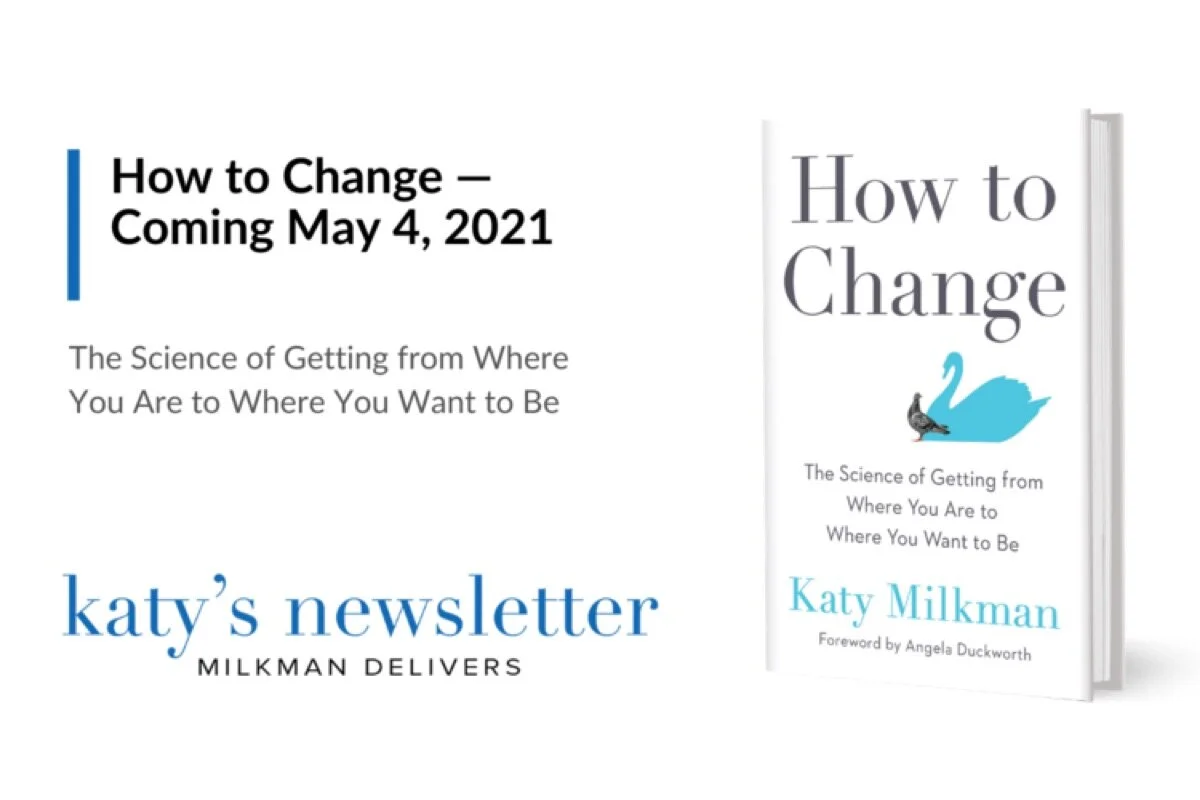
Sharing Big News: How to Change - Coming May 4 2021
January 12, 2021
A few years ago, I was going about my morning ritual of brewing tea, making toast, and listening to my favorite podcast when an unfamiliar advertisement caught me off guard. “Turns out good habits come easy,” a pleasing feminine voice cooed. I stopped stirring my tea. Really? For a few seconds, I held my breath. If someone was about to reveal the secret I’d been pursuing for my entire academic career in a single, pre-packaged sound bite, I didn’t want to miss it.
Read More
The Secret to Happiness
December 15, 2020
As crooner Andy Williams reminds us during these winter months, “it’s the happiest season of all.” But I beg to differ with his contention that “parties for hosting,” “marshmallows for toasting,” and “caroling out in the snow” are responsible for that distinction. (And it’s a good thing too, since there won’t be parties or much caroling this year.)
Read More
Why Coaching Other People Can Help You Achieve More
November 24, 2020
November is the month for giving thanks, but today I’m going to focus on another kind of giving: the kind of giving you do when someone asks for your advice. At first blush, offering words of wisdom probably seems like a selfless act. But research I’ll highlight in today’s featured Q&A shows that offering advice doesn’t just help the person you advise. It can often help you — the advice giver — achieve more, too.
Read More
Why Does 2020 Feel Jinxed?
October 20, 2020
If you’re like me, you’ve probably had at least one conversation in the last month about why the madness of 2020 just won’t let up. Ok, you say, maybe facing a global pandemic like COVID-19 was inevitable (this isn’t our first rodeo), but did it have to come with massive uncontrolled wildfires in the West and the death of a Supreme Court justice weeks before a presidential election? Not to mention reports of murder hornets spotted in Washington State. It’s hard to shrug that all off as a coincidence.
Read More
Does it Really Take 21 Days to Build a Habit?
September 15, 2020
Many of the usual rhythms I associate with the beginning of fall have been thrown out the window this September. Instead of meeting my new Wharton students face-to-face, I’m meeting them online. Instead of sending my son off to Pre-K, I’m helping him Zoom into a virtual classroom. But even in these strange and difficult times, September is bringing change. Daily routines are shifting. And that means an opportunity to craft new and better habits.
Read More
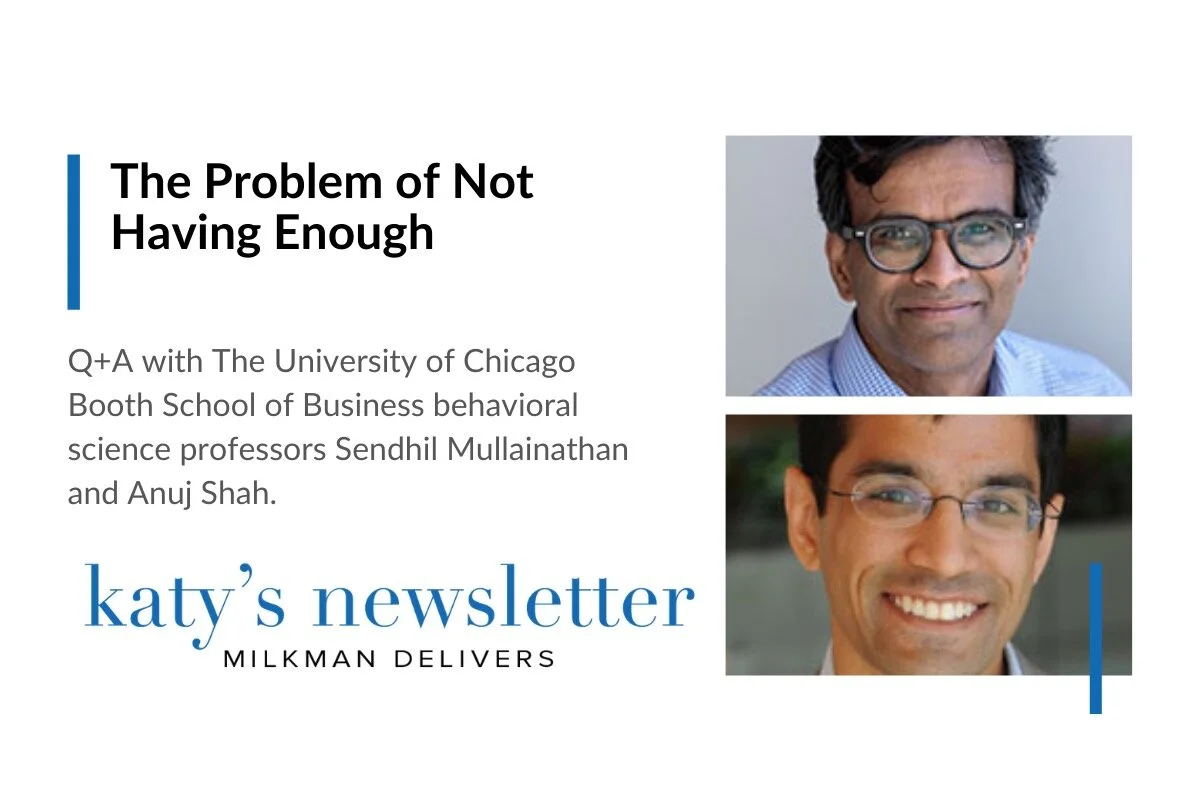
The Problem of Not Having Enough
August 18, 2020
I love sharing insights with my Wharton students and Choiceology podcast listeners about the science of making good decisions. But my overflowing inbox suggests I’m not keeping up with everyone’s thirst for new knowledge. The goal of this newsletter is to fix that!
Read More